There’s something simple about food that most of us don’t think twice about until it gets harder.
I once read a post that stuck with me. The question was, “What’s something from your childhood you’d never repeat with your kids?” One person answered that they grew up eating flour and water pancakes most nights. They basically ate paste to keep from going to bed hungry. That story has stayed with me because it’s a reminder that food insecurity isn’t loud. It doesn’t always look the way people expect, but it’s real and it’s closer than we think.
For some people, going to the store is a quick trip. You run in, grab what you need, and head home. For others, it takes planning. You make a list, think through the week, and hope you didn’t forget anything because going back isn’t always an option. That’s one of those quiet differences that doesn’t get talked about much.
Access isn’t just about whether you can afford food. It’s about whether you can get to it in the first place. In a lot of rural areas, grocery stores are few and far between. You might have a Dollar General or a small community store nearby, and those places serve a purpose, but they aren’t the same as a full grocery store. Prices are often higher, options are limited, and fresh food can be harder to find. When there’s little to no competition, convenience becomes the only option, and that comes at a cost.
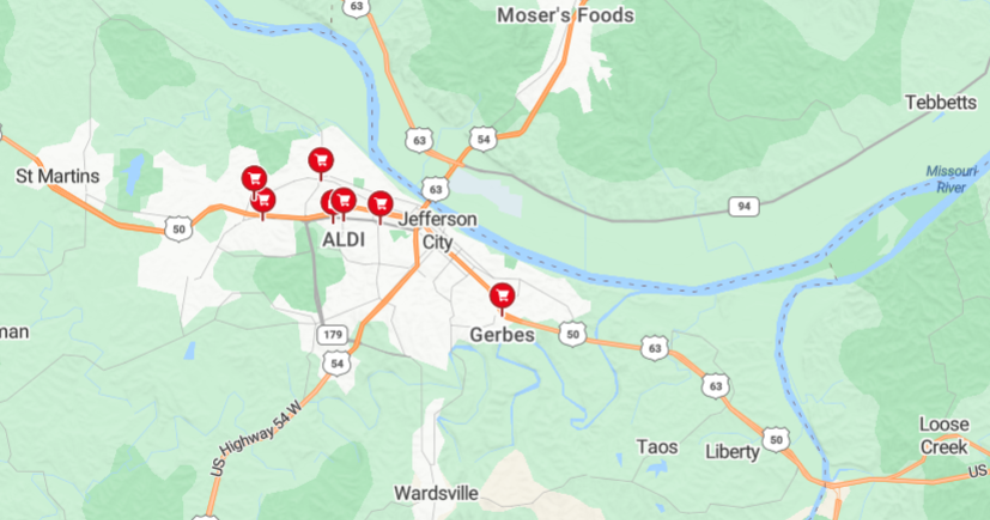
In our own community here in Cole County, some families are more than 10 miles from the nearest grocery store. In other parts of the state, that distance can be double or more. When you factor in transportation, time, and the price of fuel, that distance isn’t just inconvenient. It can be the difference between getting what you need and going without. When that’s your reality, every decision around food gets a little heavier.
For families with kids, school meals become part of that equation. For some, it’s just part of the day. For others, it’s the most reliable meal they have. That’s not always something you see from the outside, but it matters. A child who is well fed has a better chance to focus and learn than one who is worrying about where their next meal is coming from.
When school is in session, there’s a structure. When it’s not, families are left to figure it out on their own. There are programs that try to fill that gap, and they do good work, but they don’t always reach everyone the same way. Where you live, how far you are from town, and whether you can get there all play a role.
So, communities step in. You see it in food drives, church kitchens, blessing boxes, and neighbors helping neighbors. You see it at fish fry Fridays, parish picnics piled high with fried chicken and roast beef, and fundraisers in parking lots for families who’ve hit a rough patch. Around the holidays, people show up with food, toys, and whatever they can give to make sure someone else has a better season. That’s what community looks like.
But there’s another side to that. We ask a lot of our communities, and sometimes it feels like we’re asking too much. Most people work hard, take care of their families, and do what they can to stay on their feet. It’s easy to get frustrated and wonder why others can’t just do the same.
But life doesn’t always line up that way.
I remember working for a company that donated turkeys at Thanksgiving and Christmas. We would deliver them to families based on lists from schools and local programs. Before the employees even left, we reminded them of one thing. Whatever you see in the driveway, it’s just a moment in someone’s life, so don’t judge them by it. Need isn't always permanent and neither is fortune.
That stuck with me, because sometimes you’d pull up to a house and see a nice car and assume things were fine. Then the door would open, and you’d see a very different reality inside. That car might be the only thing getting someone to work. It might be something they’ve had for years. It might not even belong to them. Need doesn’t always look the way we expect it to, and if we’re not careful, we start judging people based on the few situations that stand out instead of the many who are simply trying to get by.
Most people aren’t looking to take advantage of anything. They’re doing their best to hold things together, just like everyone else. That’s why this conversation matters.
Even with school meals, food banks, and community support, there are still gaps. Not because people don’t care, and not because communities aren’t trying, but because the problem is bigger than any one piece of the solution. We’ve built systems over time to try to address it, and all of those things help, but they don’t always line up. When they don’t, families are left to bridge that gap on their own, and that’s where things get harder.
So, the question becomes, what do we do about it? We start by making it easier for food to exist in the places people actually live, which means supporting small grocery stores and local food businesses in rural communities, especially in those early years when staying open is the hardest part. It also means making sure schools are funded well enough that food programs aren’t the first thing on the chopping block when budgets get tight and looking at the strength we already have in Missouri by connecting our farmers and producers more directly to our schools and communities.
At the end of the day, this isn’t just about food. It’s about access, distance, and the reality of everyday life for people in our communities. It’s about recognizing that not everyone starts from the same place, and that something as basic as getting groceries can look very different depending on where you live. Food isn’t a luxury. It’s something every person needs, every single day, and when access to it depends on distance, cost, or availability, that’s something worth paying attention to.